World Leader Pretend (the band, not the R.E.M. song)
It's no secret that one of my favourite eras of music is the early-mid 2000s indie rock boom of Northern America (UK had a golden period going on too but it behaved very differently and it's not in scope of this ramble). It's a scene that grew quickly, collaborated together, expanded furiously and brought out a humongous amount of incredible music - not just discography stand-outs for many artists but albums that have come to bear a definitive place in wider music history, characterising the scenes, traits and ideas that floated so abundantly during this period. There are so many iconic releases and artists during this period that it makes it a veritable gold mine of music - one of the richest, most wonderful eras you can dive in to.
Not everyone was so lucky. There are a lot of artists who came into the world during this period but never ended up breaking through. Sometimes it was due to unfortunate circumstances, sometimes the music simply wasn't good enough, and other times there was no logic or reason at all as to why the planets simply didn't align. If you're an afficianado of any scene, era or micro-genre, you know that the could-have-beens can sometimes be just as exciting to wade into as the ones that made it: there are treasures to be unearthed that simply slipped through the cracks and now are only remembered by the very few who happened to hear the right blog-downloaded mp3 at the right time. With many of these acts you can understand why their names have become covered in dust, but there's still something there. Something that could have been great, maybe wasn't, but which have that untapped potential that can make wandering off onto these side paths worth considering.
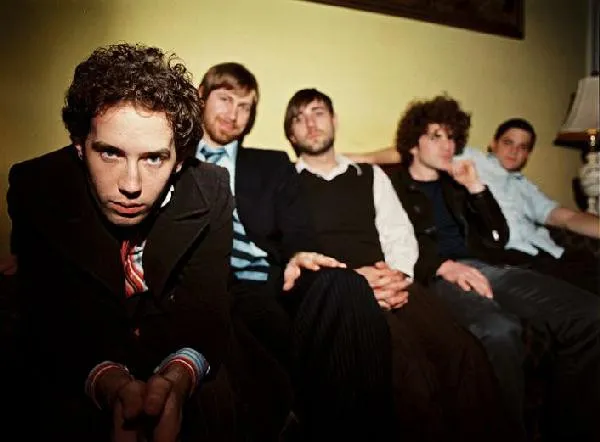
World Leader Pretend formed in New Orleans, USA in 2002 by Keith Ferguson (vocals, guitar, keyboards), Will Donaldson (guitar), Parker Hutchinson (bass) and Arthur Mintz (drums) - they were named, of course, after the seminal R.E.M. song. That is broadly the extent that you can find out about their history these days: their Myspace is obviously dead (and the Internet Archive hasn't archived it) and what little biography blurbs exist are mainly centered on the second album. What little we know these days is that the then-quartet were born into the music-rich world of New Orleans and started recording quickly after their formation: their debut album arrived a year later.
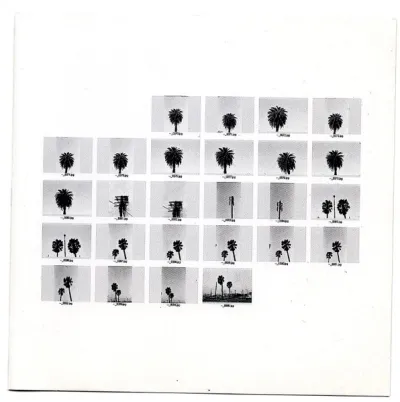
Fit for Faded (2003) was released through the small local label Renaissance Records (you know it's a small operation when the album doesn't even have a catalogue number), and that means it can be tricky to find if you're not in the States where some random guy might be fobbing off their old copy somewhere. It's also not really worth going through all the effort to find. The band were barely a year old when it came out and you can hear: it's a game of spot-the-influence throughout, and echoes of Radiohead in particular are awash throughout the eleven songs (surprisingly, there's not much R.E.M. here). The group try their hands in a lot of things - textural art-rock, noisy punk, atmospheric mood pieces, stabs at indie anthems - but in a manner that implies they're still testing things out rather than being proudly border-free in their output. Here it's clear that World Leader Pretend haven't figured out their own sound, Ferguson hasn't discovered his own singing style and keeps opting for Yorke-esque falsettos throughout, and the songs themselves just aren't particularly strong. There's a lot of good promise but little in the way of that potential being realised, and you're really just listening to another group of young hopefuls putting together their first set of songs. If there's one keeper here, it's the title track: a gorgeously minimalistic slow-burner that pulls you into its private space and barely lets go. Had I heard it in the early 2000s, it would have been a regular during my late night no-life headphone listening sessions.
Fit for Faded made a politely quiet buzz, but more importantly it ended up in the ears of the right people and Warner signed the band in 2004. Time was rife for a potential new talent to sweep up the indie nation and courtesy of acts like Modest Mouse and soon Death Cab for Cutie having signed up on major labels and still triumphing creatively, a big corporation's name on the sleeve wasn't the same kind of automatic turn-off as it had formerly been. It was World Leader Pretend's chance to snag the spotlight.
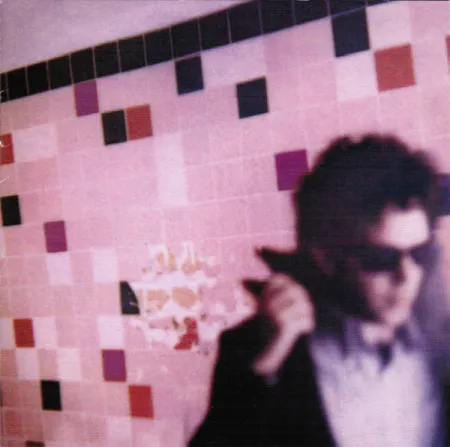
Punches (2005) comes with a couple of big changes. One, this has basically become Ferguson's project: he plays most instruments across the record and while Mintz is still taking care of all percussive elements, Hutchinson's role is reduced to just backing vocals and Donaldson is nowhere in the credits (live, they'd play as a full five-piece band with Donaldson gone and Alex Smith and Matt Martin joining in on bass/guitar duties). This has a pretty direct impact in the sound and Punches plays out a lot more like a wild singer/songwriter record than the occasionally noisy band creation the debut was. The other major element is the money brought in by the Warner deal which allows for things like more precise production and elaborate arrangements, or being able to get members of the Louisiana Philharmonic Orchestra to play strings across the tracks. The difference between the two albums is like night and day and they barely sound like the works of the same act: that applies all the way down to Ferguson's singing, which is so much more confident this time around and he gets to display his whole range from suave bellows to quirky monster-grumbles.
The reason why I (and most likely 99% of the people who came into this post with some awareness of the group already) am familiar with World Leader Pretend to begin with is the opener and lead single "Bang Theory", which made its blog rounds at the time of release. It's the type of single that is released to build attention: across its near-five minutes (on the album) it restlessly shifts from janky cymbal-crashing rhythms to orchestra-swept chorus soars, Ferguson half-slurring through the song in a disjointed mutter and half-showing off his voice at its most pristine. The song woozily stumbles all over the place like it's just had the night of its life, until it sobers up in its chorus and triumphantly announces its anthem-like arrival. It's a strange little thing but it sticks with you positively: I know I was hooked from the first listen and a mp3 of it haunted my hard drives for so long way before I ever heard the album. It still has a particular nostalgic tint for me. Promotionally though, it did little - Punches got acclaim on its release but despite the push, something just didn't work out between the band's music and the audiences.
Punches isn't a lost treasure, as such - you're not going to hear me say that this is a must-hear for everyone interested of the scene. But it's a really good album full of realised potential and with echoes of dreams of so much more. The band have kept their restlessly shifting nature but applied a little more focus to it this time around: in its core there's more piano than guitar and there's a little more of an art pop bent to it, in a manner that's not too dissimilar from e.g. what The Veils were doing this time around. Around that core they then expand their territories in different directions while retaining eyes at home. "Dreamdaddy" and "Lovey Dovey" lean onto the classier side of having an orchestra around, "New Voices" feels like an earnest stab at stadium-ready sentimentality, "Tit for Tat" adds a dash of tropicalia, "The Masses" moves into chaotic guitar crescendos like a matured version of the debut's general ideas, the eight-minute "A Grammarian Stuck in a Medical Drama" is a dreamy loop of crescendos that swells and swirls around its central motif, building until it can't anymore. There's a lot going on but it's all been wrangled together within similar sonics and connecting principles: it no longer comes off as unkempt but rather ambitious. The songs are also tied together by being good songs, with Ferguson's songwriting style having matured and discovered its own quirks. "Bang Theory" does stand above the rest but the rest of the album is no slouch; in a space of a couple of years from Fit for Faded they've come a long way with writing resonant songs.
Punches is a very good album, with plenty of ideas, personality and good songs; again, nothing that is going to reveal a whole new world to anyone coming into it now but which will absolutely have something to offer to people who are tuned into its general ballpark. It is something that, at the very least, can inspire a blog post on a whim because you realise no one else seems to even remember it exists. In the grand scheme of things it's a good "proper" start for World Leader Pretend that honestly had the legs to be something bigger than it was - if not as a hit of its own, then at least as a springboard to a bigger and bolder next chapter. Which never came.
As iterated before there's not much in the way of lore to read up on this band, let alone their quiet demise. Part of it was awful timing: hurricane Katrina hit New Orleans just a few months after the album's release and for a N'Orleans band, that understandably rewrote a number of plans. When the promo circuit continued, the hook simply didn't catch anything - 2005 was a massive year for indie rock and adjacent music, and Punches simply didn't have a strong enough strike to make a dent in the crowd. The band still had another album in their deal with Warner so work began on the next release, but shortly after the recording sessions began in early 2008 the band split due to the evergreen reason of "musical differences". Per Discogs none of the members seem to have been involved with any other projects beyond supporting roles. It is as if one day the world simply decided to move on past World Leader Pretend and left this group of men behind without so much as a second glance.
But I remember them. Punches isn't exactly a constant mainstay in my CD player (Fit for Faded even less) but every now and then something pulls me back to it to enjoy its idiosyncracies and sounds. It's an album as full of what-ifs as it is realised ideas and it has its own particular corner in the league of forgotten talent from this period. Sometimes you just don't have the luck to go on, but the music remains - and with Punches being quite cheap to acquire in the various digital second hand shops, it's never been easier to be reminded of it.