Super Sonic Rating: Ranking the 21 mainline Sonic titles (as of early 2026)
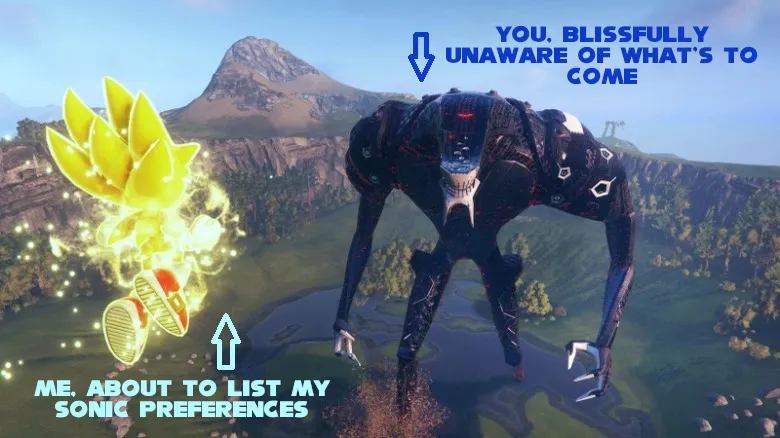
Why am I doing this to myself? Look, even as a Sonic nerd, making any kind of preference lists for the series is an enormous headache - right down to the fact that given the sheer amount of spin-offs, side titles and other are-or-aren't-they-proper-Sonic-games titles, even the base-level consideration of what to consider isn't a straightforward exercise.
But, essentially, consider this the culmination of my calculated effort across the last 2-3 years to properly revisit the series as a whole. Over this span of time I've been finally fixing the couple of major blind spots in my Sonic knowledge, revisited various titles (handheld titles included) that I hadn't touched in a decade+ to see how they actually fare versus what my memory told me, and re-completed a number of the major titles in the series. It has been a fully personal quest to basically refresh my mind on the series' history while enjoying the chance to go through its awesomely rich and varied set of games. During this span of time I have been making an effort to jot down my thoughts on the games every now and then, some of which I've already posted separately, and originally the plan here was to just list the games and plop down my ramblings next to them. But then, why not add a bit of spice to the mix? If I am already analysing how I approach and think about these games - where I get the enjoyment out of them - why not, y'know, rank them at the same time? And that's how we end up here.
Caveat 1 - the selection of games. In this list I have considered only the titles that I consider to be the "main" games of the franchise. To put it simply, they're basically the main platformer games released on the primary home consoles (and PC!) of each generation. This means no GBA, DS or GameGear games, no racing games, certainly no mobile games, no random oddities like The Murder of Sonic the Hedgehog. We're focusing on what I would consider to be the core path of the franchise with no side routes. No list like this is flawless, no one's going to agree to a definitive list in a series with this many games and so many different entry points, and there will always be "if you included x why didn't you include y" debates - but this is the way I see these things, and let's just humour me for the purposes of this exercise.
Caveat 2 - ranking a long set of video game titles across multiple decades of technological development, gaming trends and personal context is a fool's errand as far as creating any kind of a clear order of it all goes. Sometimes certain games hit you in different ways massively depending on where you are in life, what mood you're in, what you are specifically seeking out from playing it, etc, and so the ordering here isn't really strict. I have ranked the titles in numerical order from worst to best in order to give this long-ass list some proper structure, but I have also separated them under the classic SABCDE-ranks. This is partly for visual funsies, but you can also use this as a quick guide to where the games generally fall: i.e., whilst the specific ranking of any games may move from time to time depending on how the planets have aligned, any games under e.g. the 'B' rank generally fall on the same level in my overall preferences. And of course, everything here is based on how I'm currently vibing at the time of writing (March 2026) and thus will be horribly outdated the moment a new Sonic game hits or I have a sudden religious revelation about one of the mid-tier titles.
Caveat 3 - this is all subjective, naturally. One should abhor any trace of objectivity when ranking things.
Let's do this.

21. Sonic Lost World
Where to begin, really? Awkward level design that doesn't know whether the game wants to be an infinite runner mobile game, Super Mario Galaxy with a different skin or some fever dream version of the cancelled Sonic X-Treme, and no matter what it tries to go for it comes out awkwardly. Janky controls that go beyond the bizarre concept of Sonic having a separate run button which make the game feel awful to play. Insipid music that has none of the hooks, atmosphere, energy, muscle or melody that Sonic soundtracks are known for (the mere absence of a vocal theme song should be a warning sign). The introduction of the Deadly Six, a desperate attempt at boosting Sonic's villain gallery after killing off so many of the better candidates, by bringing in a whole cavalcade of budget Saturday morning cartoon villains with paper thin personalities and visual designs that belong in a shovelware title. A complete nothing of a narrative and writing that makes an apocalyptic catastrophe have the emotional resonance of a throwaway footnote, and rushes through a 'friend gets captured and turned evil' narrative path so quickly that it has zero impact to the rest of the plot and feels completely unnecessary.
Even the weakest games in the series typically have some degree of motivation, some level of ambition or a particular goal in mind which they simply missed due to one reason or another. All, except Lost World - and that is the most damning thing about it. It's a technically polished game but it looks, feels and plays like it's not clear why it even exists in the first place. It leaves the impression that no one was invested in it and they simply shoved it through the door to tick a box in the list. It's utterly despirited and sterile in every way, coming across both compromised and like it had little genuine inspiration to begin with - and that's the reason why it is the worst Sonic game. [Expanded thoughts.]

20. Sonic the Hedgehog 4
The concept of pandering nostalgia vs celebratory nostalgia will crop up a few times during this list. A series as long-running as Sonic is entitled to look back at its own history and bring up familiar sights and sounds: it helps to establish traditions and iconic elements that ultimately benefit in providing a sense of connectivity between all the games, and it can be a nice treat for long-term fans. But there is a marked difference in revisiting and reminding about those old adventures in a manner that feels like a loving nod and tribute to the past while still keeping your feet in the present, and when it's simply throwing old references into the fray for the sake of it in hopes that it's enough to keep people's attention. The Sonic series provides a number of examples of both, and perhaps predictably (given where this entry is) Sonic 4 is an example of the latter. Even its original announcement was awash with it, by making a big song and dance that it's all 2D and that it only contains the very basic elements (and, you know, the title), trying to curry favour from the increasingly vocal set of people online who hadn't touched a Sonic game since the Mega Drive days but who had very strong opinions about the games nonetheless.
Predictably, Sonic 4 ends up creatively bankrupt in both gameplay and design, and I'm quite frankly shocked that its stages only imitate the aesthetics of classic Mega Drive levels instead of recycling them outright. That wouldn't be enough to push the game this down the list; the reason for that is pretty much everything else that's going on with the game too. The physics are incredibly janky and the gameplay is clunky like Sonic Team are forcing a 2D platformer into an engine that wasn't built for it, the graphical look is awfully plastic like you're playing with cheap action figures and it's not helped by the plentiful visual bugs that render it downright ugly, and even the music is largely forgettable as the key focus is on its faux-Mega Drive sound rather than the melodies. To add insult to injury Sonic 4 also became the victim of the shortly lived episodic gaming fad and so Part 1 especially doesn't even feel like a whole game, just a slightly longer demo - and one that doesn't get you excited for the rest.
I was tempted to give Episode 1 and 2 their own separate entries here because Episode 2 is a marked improvement: the delay between the two episodes gave the team the chance to act on feedback and to try and salvage what they could, and the result is a notably better gameplay experience. It's still not particularly great though and the gap between the two isn't so big as to justify two different entries. Even when considered together, Sonic 4 is near the bottom of the barrel for the series: a game made out of nothing but desperate nostalgia that fails in nearly every part of its design.
19. Sonic 3D Blast (AKA Flickie's Island)
From an "objective" stance Sonic 3D Blast probably doesn't belong this down to the list because it's not like I have any kind of a genuinely negative reaction to it. But the reason I dump it down here is because I just don't care about it. I so don't care about it that the complete lack of reaction to it makes it almost as bad as the games that genuinely annoy me.
3D Blast honestly just had a spot of bad luck. It doesn't play or feel like a mainline Sonic game, not in the way that all the other games I've included in this list are; being co-developed by a studio outside Sega (the classic 90s studio Traveller's Tales) is likely the result why. If it hadn't been for the cancellation of Sonic X-Treme which was intended to be the Sonic game for the Saturn, 3D Blast likely would now be considered as a stop-gap release to tide over the change in the console generation before the next real Sonic game. But alas, its role as the only Sonic representation on the Saturn (besides Sonic Jam) almost by default makes it part of the bigger canon. But even so, the lack of a nebulous "feel" only excuses you for so far - 3D Blast does have genuine issues in its design too. The isometric angle simply isn't suitable for either the speed or the platforming precision of Sonic, leaving the game frustrating to control and making it really easy to miss jumps or guide Sonic somewhere Sonic should not be going. The level design isn't particularly exciting and each stage feels like a palette swap of the same ideas, and the soundtrack is one of the more meandering in the series (this goes for both the Mega Drive and Saturn versions, neither score being particularly strong beyond a few random tracks), and those help contribute the general malaise that afflicts 3D Blast.
The truth is, 3D Blast simply leaves me cold and unmoved. Most of the games in the series play better, the few that do not are at least interesting failures worth talking about. This one is just a poor, hapless extra that got accidentally shoved into the spotlight and stands there doing very little of interest.
18. Sonic the Hedgehog '06
OK, let’s get this out of the way given I imagine that by this point a non-insignificant amount of people are starting to get concerned how mad I am for not already listing the series’ most infamous entry by now.
Sonic 06 is a complete mess and you can’t defend its grievous amounts of well-documented errors in any good conscience - it’s a game that was shipped literally unfinished and it shows. Most of the time, it’s genuinely not good to play. But what makes it stand apart from the first three listed games is that it’s got ambition. It’s got vision. It aims to do something grand. Sure, its plethora of errors keep getting in the way of it being fun a lot of the time, but even at its most infuriating, Sonic 06 is interesting - you want to see what’s around the corner, which is not something you can truly say about the previous games. Plus, it’s got the Silver campaign which is a legitimately fun bit of power fantasy - a segment which proves that the game had some truly exciting potential if it hadn't been sabotaged by its rushed out release.
Sonic 06 is perhaps 'objectively' the worst Sonic game - but who gives a damn about objectivity? I have a soft spot for things that aim high and bravely take the shot even if it doesn't quite hit the target (or sometimes misses it entirely and breaks something precious in the process). S06 is a disaster in its execution, but yet it has spirit and gusto which shine through and make me want to invest myself in it, even if against my better wises. That's a damn sight more than the previous games, and that feel is why I don't think it's the worst Sonic game - because at least it has feeling.
If you wish to read more about my unorthodox stance on the game in greater detail, you can find them through the link to the [expanded thoughts.]

17. Sonic CD
Arguably the one game on this list where I feel like the fact that I only got to play it relatively late has had an impact on my thoughts of it, and maybe there's even a trace of having been somewhat spoilt by hype in the mix. During my early years of the Sonic fandom Sonic CD was frequently seen as the cool favourite title to have and the secret ace of the series, though its mystique is likely partly to have been caused by its relative obscurity (being stuck on Sega CD for a good while). When I finally got play it, years later, I was taken aback slightly. For all the undoubtedly interesting mechanics and excellent design aesthetics it has, the actual gameplay feels a little too convoluted for its own sake.
Sonic CD is a set of really great and fascinating ideas, brought into the equation a little too early into the series for them to be taken full advantage of. The central premise of travelling across different alternative timelines to (hopefully) fix the future is really neat, and the sheer depth and imagination of reimagining all the levels in a multitude of thematically different ways makes for some great visual delight. The problem is, it's just not particularly fun to play. Each level of the game has to account for several different things: that the player has the space to do their velocity-powered time warp, that they can do it across several different points in each level, and that the levels have to be complex enough to make them fit for exploration in Sonic's hunt for the McGuffins to guarantee a better future. What this results are in a bunch of convoluted levels that are more cryptic than they are open and which are a bad fit for the forward-facing nature of Sonic's core gameplay. They're awkward to navigate, tricky to find anything in and what's worse, doing the time skips leaves you feeling like you're missing out on the full levels you're already playing. Sonic CD feels like you're playing a series of constant compromises and in a manner that particularly jars with the 2D Sonic gameplay. But then, I think - if I had played this back in the early 1990s right after I had played Sonic 1 and 2, would this have blown my mind with its complexity and variety? Maybe I just missed the boat leaving at the right time.
But it is generally competently made, the soundtracks (both soundtracks!) have some all-time classic songs and the anime visuals are utterly iconic to the series. So there are plenty of upsides, and they're all ones that give it that extra cool sheen in its presentation. Whilst this list is 100% subjective by default, I am willing to say that in Sonic CD's case that's even moreso the case - I can definitely see why some people consider it a definitive title, but it just leaves me a little colder and every time I play it I like it a little bit less.
16. Sonic & Knuckles
Speaking of unusual Sonic opinions, I’ve never really considered Sonic 3 and Sonic & Knuckles to be the same game. Which, yes, is probably a little bit incorrect - they did start out as one game and were then split apart, and of course you can combine the two into the more famous Sonic 3 & Knuckles. But I never played S&K during the Mega Drive days and when I finally got my hands on it with Sonic Mega Collection, it was its own separate entry. So, my brain always viewed them separately, and that’s my excuse.
As far as the game goes, it’s basically Sonic 3: the outtakes that weren’t good enough for the main game. The music’s still banging, but for most parts the levels aren’t particularly interesting or memorable. Sky Sanctuary is an exception - it’s the reason why it’s the canon representative of the whole S3&K saga these days - but on the other hand Sandopolis is the worst level across the entire duology, and one of the weakest levels of the entire Mega Drive era. But we have reached the part of this list already where we’re not talking about weak games, just largely decent ones that are fine to play but which I never desire to go back to - and S&K is a very apt representation of that.
15. Sonic Mania
You can't fault the execution - Mania is designed phenomenally. It lives, breathes and radiates the Sonic of the early 1990s in the way that it looks like in your memories, not what it actually was like: everything's sharper, brighter, more vivid, more full of attitude. That mental image of Sonic looking radically cool as hell with a 90s arcade carpet backdrop and new jack swing playing behind him? That's Sonic Mania. They even brought back the Sonic CD era anime style cutscenes, looking better than ever, which they then utilised for a couple of future games as well. That right there is the greatest feat Mania brought with itself.
The game's OK.
Mania plays like a really solidly done fan game: lots of passion, little in the way of true inspiration. It's continually hampered by its designed status as Look Guys We've Brought Back 90s 2D Sonic mk. 2: No Seriously This Time, Forget About Sonic 4. Mania's greatest aim and purpose in life is for you to remember the early games. That's why half the stages are rehashes of classic levels. That's why it borrows so much of its general aesthetics from Sonic CD (i.e. the cool choice of 2D Sonics to like). That's why it throws so many references at the player that the game starts to feel like an extended Family Guy sequence. Sure it's cute to have a Mean Bean homage of a boss fight, but piled on with everything else it starts to get exhausting. Where are the original ideas, where is the reason you ought to play Sonic Mania specifically?
Studiopolis, I guess?
Mania is fine. To return to the theme of celebratory vs pandering nostalgia, everything about its presentation is a great example of the former; what lets it down is the game itself which is full of the latter, rehashing rather than rejuvenating.
14. Sonic Colours
The core of Sonic Colours is a solid 3D platformer, and the purest example of the “boost” style gameplay in the series without anything else on the side - that has its perks. I also enjoy the ‘back to basics’ approach with its intentionally lower stakes story, with just Sonic and Tails (in one of their most wonderfully snarkiest best buds form, the chemistry between the characters and the VAs is so apparent) vs Eggman in one of his classic overachieving world domination schemes. Sometimes it’s good to just take things down a notch, to appreciate the wider reach of the other games.
Why this falls in this part of the rankings is because I think the wisp system the game introduces and pushes as its unique gimmick (until they carried over the wisps to other games) simply doesn’t feel like it fits the flow of the game. Colours is all about its forwards momentum and the sudden wisp moments never comfortably slot into it; rather, they stop Sonic on his toes to interrupt the natural progression of the level with a slightly tacked-on attempt at branching paths or an illusion of gameplay choice (when really, 90% of the time you’re best just using the wisp the game throws at you before the obviously telegraphed section). They distract, rather than add another layer. I can see where the devs are trying to go with them and I agree with the concept, I just don’t think it works as well in practice. The best moments of the game are ones which do not rely on the wisps that heavily - that’s when you really get to enjoy the sheer high-speed fun of what the boost style gameplay can offer. There's potential for something stronger here, but as it is it just doesn't get me as engaged as most of the other 3D titles.
13. Sonic the Hedgehog 3
My hypothesis is that your preference out of Sonic 2, 3 and CD is dictated by which of them you played first and/or which ended up stealing most of your time when growing up. For me that was Sonic 2 (spoilers for later on the list), and Sonic 3’s cardinal sin was that it was like Sonic 2 but it wasn’t Sonic 2. I have nothing to complain about S3 (besides The Barrel) and I think its addition of the different shield types is a really fun mechanic that naturally expands the base gameplay without feeling either forced on or like you’re missing out if you’re not using the right shield in the right place. The soundtrack is great, the level designs bring a great deal of variety into the series and introduce many of its now-classic tropes, and if you squint you can even see the beginnings of loftier ambitions with the way its stages flow from one to another and some of the later more "dramatic" areas. For the most part, it’s as rock solid in design and gameplay as its predecessor and that makes is a really good game.
It just isn’t its predecessor and I never saw the reason to play this if I wanted to play a Mega Drive Sonic, and thus it ends up falling down the ranks because I just never formed a particularly special relationship with it. Life is unfair sometimes, and not all these entries are very insightful.

12. Sonic Superstars
Superstars shows how to bring a 2D Sonic adventure to the modern day and not make it feel like a retread of everything we’ve played before: add something new. Superstars’ tweaks to the classique hedgehog platforming are small but carry a big impact: the emerald powers break up the standard A-to-B running in a fun way that adds a touch of choice and variety into running through the levels, and the differing playstyles between the characters builds from what prior 2D Sonics (including Mania) established. Despite some throwbacks (Fang is back Fang is back Fang is back Fang is back) Superstars doesn’t also retread the past, with no reliance on direct pulls on old levels or insisting on reminding the player of the games they played on the Mega Drive. The result is that it feels fresh - like a new addition to the series worth experiencing for its own traits.
Superstars isn’t perfect and its issues are well-documented - mainly some of the more obscene and unexpected difficulty spikes, the uneven soundtrack with no consistent style and the multiplayer mode that was wholly ignored by literally everyone and ultimately wasted precious development time. But it does what a lot of retraux 2D platformers don’t: invite you in for an enjoyable game time for more than just a bit of nostalgia pandering. [Expanded thoughts.]
11. Shadow the Hedgehog
The edgyhedgy adventure is classic Flintbait i.e. ambitious but janky - the key difference compared to other similar games in this list is that it’s operating on a different genre, and not necessary in Sonic Team’s comfort zone. The shooting-heavy approach is really reminiscent of period contemporaries like Ratchet & Clank and Jak & Daxter, and I wouldn’t be surprised if the popularity of these titles weren’t some form of inspiration. However, the engine is still more platform-focused and so is the team’s expertise, and despite the hefty amount of gun action in the gameplay it feels a little shoddy and unrefined. It plays like a tiny tacked-on side hustle, but its prominence is that of a main gameplay element. The result is, well, janky - sometimes a little frustratingly so.
But I am glad that in recent years Shadow’s Own Game is one of the couple of Sonic games that have had a critical re-evaluation as people have grown past the immediate memes and have actually started to approach the game as a, well, a game. There’s a solid little platformer/shooter title in there despite the doses of clunkiness, and the progression is genuinely inspired with its constant micro-choices and branching alternative narratives. Depending on how you pick your battles the game’s imminent camp-levels of edginess can transform into genuinely interesting bits of character growth or going so deep into the abyss that as a simple alternative timeline exercise it can produce some really interesting scenarios, some of which get far darker than any other Sonic game. It makes the mandated repeat replays really fun, even if the levels begin to repeat - but the adventure always feels a little different. A messy but interesting end to the Adventure era of games. [Expanded thoughts.]
10. Sonic the Hedgehog
Sonic's first ever adventure bears the same unavoidable (and at the time naturally unexpected) issue that many other similar humble beginnings do: after so many evolutions, adaptations and re-iterations, the basic blueprint that built the foundations is now practically detached from what we have come to associate with the series. Sonic 1 plays slower than any other Sonic platformer (not acknowledging the Game Gear games here), it's missing gameplay elements that are now considered core essentials like the spin dash, and there's even minor aesthetic variations like six Chaos Emeralds instead of seven - all of which pulls it further apart from everything that has been released afterwards. It's clearly a Sonic game - and a very important one at that - but no longer quite acts like a Sonic game.
Even with that in mind though, in general terms we're still talking about a really good platformer. The overall design - music, graphics, style, levels - is excellent throughout, its skillset may be limited but it does a rock solid job with what it's got and you are still left with an impression afterwards. You could argue that these days that it's a game only worth revisiting if you specifically want to witness the first steps into this wonderful world it would go on to create, but even from that aspect it's still a rewarding archeological dig to explore. And yet, after much careful deliberation and lots of tweaking (this title was the one that kept swapping places the most), it's in the top ten - that's for the basic-as-hell reason that this was my introduction to Sonic (alongside its sequel we'll touch upon later) and not only did it captivate a young kid's mind so strongly that decades later I'm still living surrounded by this series, but I played this so much. It still feels a little special for that.
The magic was there right from the start - no wonder Sonic would go on to be a phenomenon.
9. Sonic Heroes
Back to basics can be a dangerous approach but sometimes it’s the only way to go. After the two epic, narrative-driven Adventures, Heroes pivoted for a more classic kind of Sonic story rather than attempt to keep increasing the stakes: you’ve got your traditional two-act zones, a bouncier soundtrack, straightforward A-to-B levels and no ranking system or alternative missions to worry about. The titular heroes mechanic is ultimately little more than switching stances and allowing the player to take on different approaches in otherwise linear levels, though that’s also where the game’s weakest flaw lies in. Only the Team Chaotix story dares to take more unique approach to the three other campaigns which all run the same levels, while the other three teams are mainly a badly communicated difficulty level selection where you’re forced to play through all the campaigns anyway if you want the real ending. So, there’s some slightly unwanted repetition involved in Heroes.
But it’s a blast to repeat, regardless. Heroes is a vivid, giddy experience - its foundation is built on bright colours, dazzling sounds and over-the-top set pieces. It is as close to a full-on Saturday morning cartoon affair as mainline Sonic games ever have as our various protagonists zoom across hyperbright metropoles, navigate the backs of giant turtles and hassle giant frogs, pummel their way through gravity-defying haunted mansions and defy gravity back running across the rails of giant cannons. Every level is a spectacle - a fun ride, if you will, where the characters zoom through the radiant sceneries with enthusiastic energy. The level design in Heroes truly is wonderful, as each one leaves such a lasting impact in so many different ways - no wonder that when some people disagreed with the level choice from Heroes in Generations, no one could agree what level they should’ve picked instead given all of them have fans. Combined with one of the series’ best soundtracks, Heroes makes for an unforgettable experience.
With a little tweak in how different the different teams played Heroes would have undoubtedly be another classic. As it is, it’s “just” another great Sonic game. [Expanded thoughts.]

8. Sonic Frontiers
I was so burned out on open world games when Frontiers was announced, and I still am - but Frontiers took no time to convince me there was still something to that exhausting formula. Partly it was - and I can’t deny it - because it is a Sonic game, so I’m immediately more invested from the very beginning. But there’s a few other key elements too. One is breaking the world into smaller chunks - “open zones” rather than an open world - which immediately makes it feel less chaotically, oppressively large: you can conquer this world at your own pace in reasonable sizes, containing that urge to explore and to see what’s behind each enticing nook and hill in bite-sized chunks that never overwhelms. And conquer you will, as well, as Sonic dashing through these zones never gets boring. The fast travel option barely even registers as something you should utilise because zooming through the landscapes is so addictive - Frontiers is perhaps the one Sonic game that truly captures the power fantasy of being a super speed lightning bolt on two legs, as instead of containing you within neat corridors it gives you the chance to simply traverse using Sonic’s innate capabilities. It’s phenomenal.
But what strikes me the most with Frontiers is its atmosphere. Right from its very beginning it’s full of mystery and an ambient sense of melancholy and yearning, as Sonic wanders into this strange environment drenched in rain and accompanied by a haunting piano melody. I was immediately grabbed by just how different and thought-provoking that mood was, and all the game’s design decisions keep that in mind: Sonic’s deeper and more nuanced voice direction (I love it, btw), the contemplative discussions he can have with his various friends and foes, the way the Super Sonic battles truly make you feel like a god upon earth with tremendous powers and for once (in the games) channels just how tremendous that aspect of Sonic is instead of it just being a quick last minute power-up. The graphics make a wonderful use of contrast between the ruined worlds Sonic explores and the vividly coloured series trademarks, and the overworld music captures the essence of the game’s heart emotively. It’s one of the few Sonic games which genuinely evokes a sense of time, that these adventures the characters have undertaken have truly happened across a span of time and each one has left its mark on them. As much as people want to rag on about Ian Flynn shoving in references in his writing, Frontiers shows just how poignant that can be: when nods to the past become milestones in a long legacy that both the characters and the player reflect on. The counterweight of the cyberspace stages - all hi-energy techno and pure platforming ‘puzzles’ - is balanced excellently, providing a bit of an oasis from the more time-consuming exploration and headier plot, while hooking in the player just as strongly with their wildly different gameplay angle, providing these more excitingly streamlined sets for the player to master their skills with.
Frontiers is both a successful jump into a very different gameplay formula while retaining the core essence of a Sonic game (pulling this transformation far better than e.g. Zelda did), and a compellingly thought-provoking experience that kept lingering in my head long after I finished the game (and its DLC). Its style is mood and unique to the series, and it’s just inspiring how something like this can occur so “late” into such an established franchise.
7. Sonic Forces
Sonic Forces has such a fantastic premise: Eggman has finally done and damn near conquered the planet like he had always wanted to, and our plucky group of heroes have become freedom fighters, engaging in tactical guerrilla warfare against insurmountable odds. It's such a good, different chance of tact for a Sonic game, and it builds into one of the series' most thrill-giddy entries.
A key part of Sonic Forces is the avatar feature. You can describe it like a punchline if you want to - let the Sonic nerds self-insert their OCs into a game, and so on. And... yeah? That's rad. Forces' self-insert avatar character, the young and frightened rookie of the resistance who'll not only become a crucial part of the revolution but who will befriend Sonic the Hedgehog himself is one of Forces' defining features and brings me endless delight. It's such a fantastic way of the player becoming a part of a Sonic adventure in a manner never seen before, and it's been executed perfectly to act as an earnest OC power fantasy: when my character teams up with Sonic and "Fist Bump", the main theme of the game, starts playing, it genuinely pumps me the heck up. There's enough freedom in its character creation that you can create a honest character with an imagined backstory (mine was, due to the outfits chosen, an office call centre worker who'd turned into an unlikely hero) or an online shitpost, and both are totally valid options that the game can easily run with.
That adds up to Forces' genuine rollercoaster rush of an experience. It's a no-holds-barred, no-time-for-stopping thrill ride, each set piece and level trying to do outdo the last in the sheer amount of stakes raised and epic set pieces to pummel through. There are so many fantastically memorable levels throughout Forces, and the atmosphere is made all the better by the rest of the resistance frequently chattering on the radio to bring a wider context in because you're not the only one trying to save the planet. The assault on Capital City is one of the series' high marks in levels both in design, the tension and the sheer spectacle as the new bad guy Infinite's reality-warping powers twist and turn the world around you (I am so glad the recent Chaotix Casefiles podcast adventure resurrected Infinite, and I'm excited for the possibility of his megalomaniac ass to become a recurring sight). It plays fantastically as well, whether you're dashing around as Sonic or shooting and slinging around as the avatar... and Classic Sonic is there too I guess. The reason why Forces isn't higher is solely down to the Classic Sonic sections, mandated by SEGA courtesy of how well-received the Classic Sonic parts were in Generations. Sonic's time-travelling younger self is a really awkward fit into the plot (it's very clear everything was written and then he had to be forced in), the engine doesn't quite bend into sudden 2D platforming precision which leads to some jank, and the weakest parts of the otherwise magnificent soundtrack are the "this'll-do" level Mega Drive sound font exercises in Classic Sonic's levels (still good songs though).
Sonic Forces also bears a little bit of a crucial role in my own Sonic journey, as this was the first brand new Sonic game after Generations which was released on PC - meaning I could actually play it after having lost access to the PS3 that I played the prior titles with. I wasn't even too enthused by buying it in the first instance for whatever reason, and instead it was given to me as a gift because hey I like Sonic right. I still vividly remember the sheer joy I felt playing Forces for the first time, how wide my grin was when dashing through its ever-escalating levels and turning the tide of the war. I felt so happy. Subsequent replays of the game have simply served to highlight just how excellently designed and invigoratingly exciting it is, becoming one of the handful of Sonic games where I genuinely do not mind repeating the same level over and over and over again while trying to pull off some mad trick, collectible hunt or an achievement. It makes me giddy.
6. Sonic Unleashed
Ask my 2008 self whether I'd consider ranking Sonic Unleashed this high in a list, and even he would raise a questioning eyebrow. I've never been an Unleashed hater in the manner that some people make into their personalities (I've always defended the Werehog levels), but even I would've filed it in the 'good but flawed' folder for a good long time. What changed? Well... I played it again. I've actually replayed most games on this list in the past 1-3 years so it's all quite fresh in my mind, but Unleashed is the one that's really gained the benefit of hindsight and re-exploration.
When the Unleashed Recompiled mod came out, I joined the crowd of people replaying the game and rediscovering just how strong it actually is. There were external mitigating factors of course: a modern PC can make the loading times faster, I could play it with an actually good controller instead of the DualShock which has always been an ergonomic hell for my hands, and the mod allowing for the infamous (and deservedly so) Werehog battle music to be turned off was the only quality of life change I toggled on. But the game itself had not changed, and coming back to it with a more matured and experienced POV, I really appreciated everything it had to offer. Sonic's globe-trotting adventure is genuinely a delight of details, from the richness and intricacy of its different countries and continents to the marvellously lush soundtrack which (unusually for the series) emphasises steady and long build-ups and crafting a delicate atmosphere. Both the action stages and hubs are a real joy to hop around it, immersing oneself into sights and sounds they have to offer - whether that is the more traditional daytime Sonic levels which have some of the most intense focus on speed out of all Sonic games, the more leisurely werehog levels where exploration is rewarded and the combat is as basic or complex as the player chooses to go about it, or just helping out random people in the hubs and following their personal stories. One also ought to mention Chip, who for a long time was considered merely yet another one-off character there to be a living McGuffin and then forgotten about immediately after the credits; but out of all these single-purpose characters, Chip is the only one where both the writers and actors have managed to create a genuine relationship with Sonic. After the initial cheap jokes I begin to care about Chip, and the quieter conversations he has with Sonic later in the game really do feel like a discussion between friends. There's a real chemistry between the two characters, and that gives Unleashed its big heart.
Heart. That is what Unleashed represents for me. My time with my most recent replay was an earnestly rewarding experience, where I simply loved to spend time with all these people in various corners of the world, doing my duty to rescue the world but not forgetting to take a breather now and then and share a sundae with a friend. Unleashed radiates atmosphere, be that series-defining thrills (the clock tower run, the dash across the whales, the final boss battle featuring one of the franchise's greatest battle themes), the cosiness of taking a road trip across the world, or the quietly melancholy parts that provide the necessary shade to make the light spots even brighter and warmer. Unleashed always lingers in my mind long after I stop playing it, and that's a sure sign of a great game.
5. Sonic the Hedgehog 2
Sonic 1 and 2, together, were my introduction to our beloved hedgehog hero: one day my dad brought home a Mega Drive and a whole bunch of games, the first two Sonic games among them. In hindsight it was quite an interesting thing to experience both games side by side, given how markedly different they were - and though I loved Sonic 1 and played it over and over again, it's the second part that I became obsessed with.
Sonic the Hedgehog 2 is where Sonic as a series is truly born. The touted speed elements are more emphasised, with level layouts and updated game mechanics supporting the player's ability to go as fast as they can at any given opportunity. The design all around is more developed and more uniform, building a unique identity for both the characters and the world itself; Nakamura's soundtrack also builds on the concepts of the first game's (already incredible) music but expands on them and in the process effectively codifies the musical legacy of the games. There's Tails, Sonic's first loyal friend and the start of a soon-growing cast of technicolour critters who'd become as integral to the series as Sonic himself. Sonic 2 looks, sounds, feels and plays like a Sonic game should - and to this day, it's basically the template for any "classic" revisitation of Sonic. Therein lies the problem too for those numerous follow-up games - Sonic 2 perfects this particular formula with such fire-proof vision that everything trying to walk directly in its footsteps ends up feeling a little lackluster by comparison. After all, why would you play something that tries to imitate perfection when you've already got the original top of the class example still available?
Sonic 2 is the peak of the series' 2D strain, and a bazillion years after its release and my first time with it, it's survived not because of nostalgia or fond memories but because it's such a tightly designed adventure that it's not aged one bit. Not only is it an exemplary Sonic game, but it can proudly hold the title of quite possibly being the best 2D platformer of all time in general. And we're still not even done with this list by a long shot!
4. Shadow Generations
Shadow Generations exists in a weird middle-ground limbo (a 'White Space' if you will) between a legitimate mainline entry to the series and an extensive piece of bonus DLC. It is intrinsically tied to Sonic Generations, both in its theme of Shadow finding himself re-running through his past stage highlights in the vein of Generations, but also because it quite literally cannot be bought outside the Sonic Generations remaster. But in equal amounts, it's just as much tied to Sonic Frontiers, reusing its engine and some of its gameplay ideas in how it builds Shadow's time-traveling experience from the way the central open zone hub operates to the overall flow of the traversal. It is a playground of experiments on how to follow up from the somewhat surprising success of Sonic Frontiers, hiding under the disguise of just being 'a bit of bonus content' placed next to an anniversary remaster of one of the series' most celebrated titles, released during the self-announced Year of Shadow when good will towards the edgyhedge was at its height. Shadow Generations isn't really even its official title: strictly speaking it's the Shadow portion of Sonic X Shadow Generations. Can you discuss it without constant references to Sonic Generations? Should it even be here? Should it be this high?
Yes, yes, yes. One, whilst the game shares the central concept with Generations and takes place during Sonic's time-travel shenanigans (with the two crossing paths at the right time), how Shadow Generations goes about it is wildly different. Between the open world hub level which expands significantly from its initial little island to a veritable playground of exploration, to Shadow's growing amount of gameplay-altering super powers and simply how the levels play out (removing the 2D zones given there's no Classic Shadow), Shadow Gens plays out like its own title - a hybrid of past games, concocted into a mixture that plays uniquely in contrast to the games around it. It's also significant in size, well deserved to be called a full game in its own right instead of a quick spin-off campaign - if they had charged this as a standalone experience at full price, it would've been fully justified. So that's a yes to the first two questions.
The third 'yes' boils down to how Shadow Generations doesn't just mix together ideas from other acclaimed Sonic games, it's how it takes the best of those ideas. As a gameplay experience it's dang near flawless - the levels are fantastic, the boss fights genuinely exciting, the hub world never gets old to zoom around in, and the slow dripping of new skills may be an old hat in gaming but done just at the right pacing here to bring in something new every time you feel like you've mastered the previous lessons. Then you add the constant Rule of Cool operated at maximum strength throughout, from Shadow ripping off a giant cannon on the first level to the absolutely insane visual feasts of the dimensional freak-outs peppered across the levels. Sonic's coolness is about speed, flow, doing the impossible like it's no sweat; but Shadow is a practical beast fully in belief that his sheer power is there to be utilised, and these displays of pure strength gives the action set pieces a completely different feeling to how you would typically get through them as Sonic, while also allowing for the gameplay experience to be tailored in different direction. Then you also add the emotional beats thrown at you by the script, intent on not just giving Shadow a set personality and motivation after two decades of back-and-forth bouncing on what he's like, but also aiming to humanise him to give him depth beyond just his gruff anger at most things. It's done sublimely, again taking guidance from Frontiers' exploration of more contemplative subjects and applying it to Shadow's PTSD-riddled past.
It plays fantastically, it looks and sounds brilliant, it's got a distinct personality and it has heart. It's got everything we've come to learn over the course of this list that I love in Sonic games. How could it not be this high? [Expanded thoughts.]
3. Sonic Adventure
Out of all the games on this list, Sonic Adventure has aged the absolute worst. It bears all the hallmarks of the first generation of full-3D games and there isn't a rose-tinted glasses prescription strong enough to excuse all the jank; doubly so if you've played anything but the original DC version, because every reissue and port since seems to have suffered from one new glitch or graphical issue or another that further piles up problematic "yes, but.."s for anyone who loves the game. It is, at its worst, the roughest of all the games in the series to return to because of the harsh reality of time itself.
Why Sonic Adventure places so high in this list then, and in the equivalent lists of so many other Sonic fans, is because it captures the essential soul of Sonic as we know his games now. It was one of the series' great watermark points as it invented and introduced the concept of "Modern" Sonic, retrofitted the characters, the world and the tropes to work in a refurbished setting, set the markers for how the series' music would sound like from now on - basically so much of why I (and others) love Sonic now was codified by this game. And it wasn't just a simple 1:1 transfer of the 2D adventures to 3D - the ambition that fuels so much of the series is in full display here as Sonic Team strove to create something truly defining and iconic. Six playable characters, multiple gameplay styles, hub levels and interconnected zones, interweaving stories, establishing lore moments and major character development scenes, a truly apocalyptic end game scenario which feels truly heroic to beat, the reset of how Super Sonic is treated, the Chao Garden... There's just so much that Sonic Adventure brought to the games, and in this first iteration all of it is full of wide-eyed optimism and idealistic passion. Sonic Adventure dreams big and then relishes in that dreaming in a manner unique to this wild frontier period of early 3D could truly capture. Through that, it retains a sense of freshness: while the following games would basically take everything here to refine and expand on, even now Sonic Adventure feels distinctly like its own thing because for it, it's all still so now and there's not a drop of any kind of course correction or second guessing to it. It beams with optimism and that translates to a gameplay experience that even with all the jank still has a special aura. Take it from me - I didn't play this until after its sequel and was still captured by its whims.
Sonic Adventure in some ways feels like the daydream ideal of a, well, a Sonic adventure. Yes, Sonic's mouth looks ridiculous; yes, the early 3D camera can be your worst enemy at times; yes, Amy's chapter is a pain; but even decades on, it has a kind of magic and charm you can't find elsewhere in this series or across other 3D platformers.

2. Sonic Generations
Let's finally talk about that elusive celebratory nostalgia.
Sonic Generations was released during the franchise's 20th anniversary year, and its point is quite literally revisiting past glories. Not just that, but the old Sonic from the Mega Drive days is back too - as his own separate entity, with his own stages that are designed as direct throwbacks to how the levels worked back in the ye olden days. There's a jukebox of every Sonic banger you could think of (the ones Sonic Team have the rights for these days anyway), all the major and even some minor side characters pop up to remind they've been part of the ride too and give people the chance to see their favourite niche character, the music is 90% based on remixes of familiar songs. So, why am I so hot on this while lambasting the likes of Sonic 4 and Mania about treading these same notes?
Sonic Generations is not an attempt to ride at the coattails of past glories - it is a love letter to those glories, while still ensuring it stands on its on two feet. Nothing in Generations tries to replicate the past: rather, it re-imagines it, playing up to how we remember these games rather than what they were actually like in reality. Green Hill Zone is almost idealised, the Rooftop Run clock tower scene is now as epic as we remember it to be, the Sonic vs Shadow finale in Sonic Adventure 2 brought to life with stakes beyond the original. Sometimes it serves to fix what went wrong and present what should've been there to begin with, most obviously finally unleashing the potential of Crisis City's setting to create two of the most memorable levels in the entire series history, and giving Silver's powers a lift beyond just throwing chairs and tables at you. Each scene has been lovingly crafted to be something more, to be extraordinary instead of simply pointing at familiar settings and asking if we remember them. It becomes a brand new experience that offers something the originals did not; and that becomes doubly so when you consider the actual gameplay, starting from how both Classic and Modern Sonics behave. The Classic Sonic stages feel like a true attempt to bring the old style gameplay into the modern day, making it fresh again rather than repeating old choreographies; meanwhile the boost-style Modern gameplay finds its perfect balance and harmony between the giddy high-octane high-speed rush and more cunning and nuanced platforming. There is no other Sonic game that quite plays like this. Add to that the little bonus stages and collectible hunts, the skill system... There is so much new to Generations, and it's all executed perfectly.
Rather than try tugging at my fond nostalgic memories directly and leave it at that, Generations instead makes it a point to remind why I fell in love with the series as a whole. It leaves all the baggage behind and celebrates the rich, vast history of the games, and the ride is like a thank you to the fans for being part of it. It's an abstract feeling to try and explain in words, a real je ne sais pour quoi moment, but I keep coming back to that one word: celebration. It's Sonic's party and we are all invited, not trying to relive the past but to raise a toast to it and reflect on why the last 20 years mattered, and it feels like Sonic Team themselves are doing the same instead of simply copy/pasting old tropes. But though the scenarios are based in the past, you play them with the benefit of the lessons and experiences learned along the way. Sonic Generations is a phenomenal game, and I would argue it's the best Sonic game in terms of pure gameplay tightness, but above all it makes me realise why I love this series so much to begin with. Of course part the reason this is so high is also to do with the fact that it's a great big love letter to the series - as a big fan of the series, I'm right there to appreciate the story so far with the Sonic Team.
The first time I heard the crowd of a Sonic convention shouting "happy birthday Sonic" at the end of the credits roll, I welled up with happiness. I goddamn love this blue hedgehog so much.
1. Sonic Adventure 2
I mean, obviously. If you know me, you knew this was going to be at the top of the pack. If you don’t know me, then you likely suspected it to begin with given throughout this list it's become obvious I'm a millennial Sonic fan. Like it is the case for many of us in this group, Sonic Adventure 2 altered my brain chemistry.
I don’t think there’s anyone who would earnestly say that SA2 is a flawless game. However, what makes it such a superlative event not just as part of the wider Sonic history and as a Sonic game, but as a gaming experience in general, is just how phenomenal its ambitions are and how incredibly it succeeds in reaching them. This is a game that splits itself in three wildly different game modes which could each carry a game in themselves, and that’s not even including the mini games (of which the Chao Garden is basically a full game in its own right); the soundtrack is so varied and fearless that it’s one of the most genre-tagged releases in all of RateYourMusic and they are nitpicky about genres; the narrative injects hitherto unprecedented levels of drama and scale into the series (even after the events of SA1) and in the meantime introduces Shadow the Hedgehog with such gusto that SEGA were practically forced to bring him back after initially considering him a one-and-done deal.
No, SA2 is not defined by its jank and its rough edges. It’s defined by its epic vision, its aim to do something bigger, something truly definitive that would be the greatest adventure the blue blur has ever undertaken as it ringed in the 10th anniversary of the series. It presents just that: a gameplay experience full of twists, turns, unexpected depths and unforgettable set pieces. It’s an all-guns-blazing set of fireworks that reaches for the stars and not just gets there but plants a flag on them. Yes, it's a cartoon animal mascot platformer and there are a lot of those, and there are also many that throw in random other genres into the mix and just as many ones that dare to dream big or try to add a bit of unexpected depth to their narrative, or etc or etc. But none of those do it like Sonic Adventure 2 - none of those pull it off like Sonic Adventure 2. Playing it for the first time feels like being pulled into an epic passion project lead by a vision that no one could say 'no' to; playing it again and again afterwards, cracking those elusive A-ranks and unlocking everything you can, makes you appreciate just how iron tight it is as a game despite its occasional camera screw-ups and control freak-outs. It's a game that has always been at arms length for me, ready for a quick session in case I feel like it - and then those quick sessions turn out into a couple-hour marathons because I get sucked in so deeply to reach new goals, play my favourite stages for the fun of it, or actually get invested in the chao system.
Sonic Adventure 2 captured my imagination. In 2002, I hadn’t played Sonic games since the Mega Drive days nor had I owned any consoles between that period (born and bred PC gamer). But I did get a GameCube for Christmas 2001, and soon after I was frequently browsing console game shelves again. Sonic Adventure 2: Battle was an impulse purchase - “hey, I remember this blue hedgehog, used to love Sonic 1 and 2, wonder what he’s up to now?” I said to myself innocuously as I picked up the box. It triggered something substantial within me. Soon after I’d be spending my days in Sonic forums and communities, playing all the games I had missed in-between, excited for every single bit of new material from the franchise. Those online experiences and friendships I made eventually turned into real-life friendships and they in part dictated some of the major life changes I made; you can genuinely take that domino meme and place buying SA2 in one end and my exact current life position on the other, and it would not be a slightest bit of exaggeration. The SA2 Multi-Dimensional Soundtrack was the first video game soundtrack purchase I made (and paying €25 for it in 2003-ish sure paid off), and the experience of hearing all these songs coming out of my stereo speakers was mindblowing. The songs themselves have buried themselves deep into my heart - some of them genuinely some of my favourite pieces of music of all time.
SA2 is a genuinely impactful game for me, and no matter how many times I play and replay it, it feels both fresh and refreshed, and like the most comfortingly familiar space I could find myself in. Of course it was going to be in the gold medal position. And I don't think it'll ever move from there. One of the most pivotal, impactful games in my life and the reason I find myself decades later spending crazy amounts of time on lists like this.
Want to comment or get in touch? You can send any thoughts through this link!