Revisit of the Week: Ultra Bra - Vapaaherran elämää (1996)
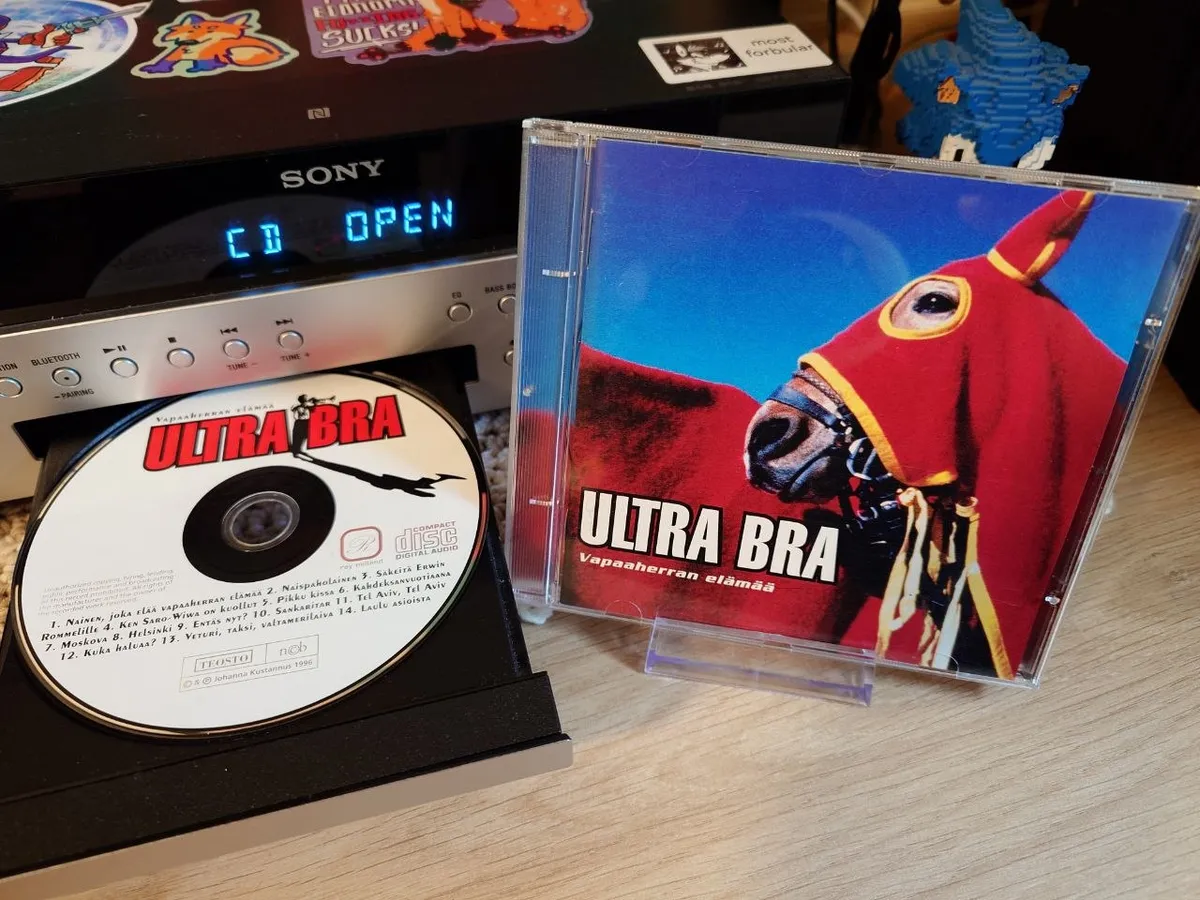
Stop tittering about the band name, it means "ultra good" in Swedish.
Ultra Bra are, however, Finnish - and an era-defining cultural force who are synonymous with the 1990s for certain generations. They were a formidable force as well, with the band's line-up consisting of about 12-13 people - that's 4-5 singers (depending on the album), a full rock band, a pianist, a percussionist, a horn section and other miscellanea. That crowd wasn't just set dressing either, but an integral part of the band's sound: the combined force of multiple songwriters and lyricists, the vocalists who each not only stood up as an individual presence but above all harmonised perfectly one another as one unified front, and intricately layered arrangements were all a key element in their success. Ultra Bra were only active for about seven years during their original run, releasing four albums, one EP and a compilation, but they dominated Finland during this intensely brightly burning period. Every song was an enormous hit, some album tracks were picked up for radio play just because and absolutely everyone had an opinion about them. At the heart of it all were simply some incredible pop songs that would immediately brand themselves on your brain from the first listen - but everything else about them felt larger than life. At the time they were operating I was still going through the phase where I stubbornly didn't give much time for Finnish-language music (English was just so much cooler) and even I had their albums.
Ultra Bra were formed in the mid-1990s for a one-off appearance in a socialist youth organisation's band competition. They won, and decided to give being an actual band a go - and even with a few member drops they still had a small army's worth of musicians on stage. The politically-minded origin isn't just a piece of trivia but a huge part of Ultra Bra's original ethos: one of their key musical inspirations were Finnish political pop songs of the 1960s, and social and political commentary were a frequent part of their lyrics. A five-track EP was recorded in 1995 which lead to the band being signed, and a year later this - their debut album - was released. One of the largest music magazines in the country selected it as their album of the year and the record itself spent seven weeks as #1 on the album charts. Ultra Bra's domestic domination had begun.
Vapaaherran elämää ("The Life of a Freelord") is the least good out of all the four Ultra Bra albums, but it is arguably the purest representation of what Ultra Bra originally represented. The stylistically fluid soundworld combines modern rock and aforementioned throwback pop influences with big band arrangements, jazz flourishes, nods to lounge and disco, and often all in the same package - it's an album where wah-wah guitars and romantic string sections form perfect bedfellows as a multi-voice choir bellows next to them. None of the band's multiple writers (including their many court lyricists who didn't appear on the albums themselves) were yet to find their exact, ideal voice so the album is scattershot in both its musical and lyrical tone, but in the kind of sense where it's excitingly unpredictable. There are powerfully emotional and evocative songs about e.g. a child dreaming of the apocalypse, and sharply-biting political lacerations both domestic and international; there are also songs about love, unabashed horniness and simply about nothing at all (the final track is simply called "Song About Things" and it's just a list of things like cheese, pelicans and omelettes and states that the world is full of things... while the music whips up to the most bombastic explosion on the record). There's always something new around the corner, and you can practically feel the excitement of a still-fresh band simply having fun throwing ideas on the wall.
Ultra Bra's later albums would be more consistent and cohesive - and arguably better - but even with their lighter moments none of them would this fun again. Vapaaherran elämää actually benefits from the band not yet having completely figured out their own shtick or getting really serious about being a functional rock band (I guess becoming one of the nation's biggest bands puts some pressure on you to focus), and because of that it's perhaps their most unique album. And, honestly, listening to it again it's pretty wild that not only this is something that spawned out of thin air but that it actually became huge and not just critic fodder. But, as said, at its core it's all just goddang good pop songs.
Want to comment or get in touch? You can send any thoughts through this link!